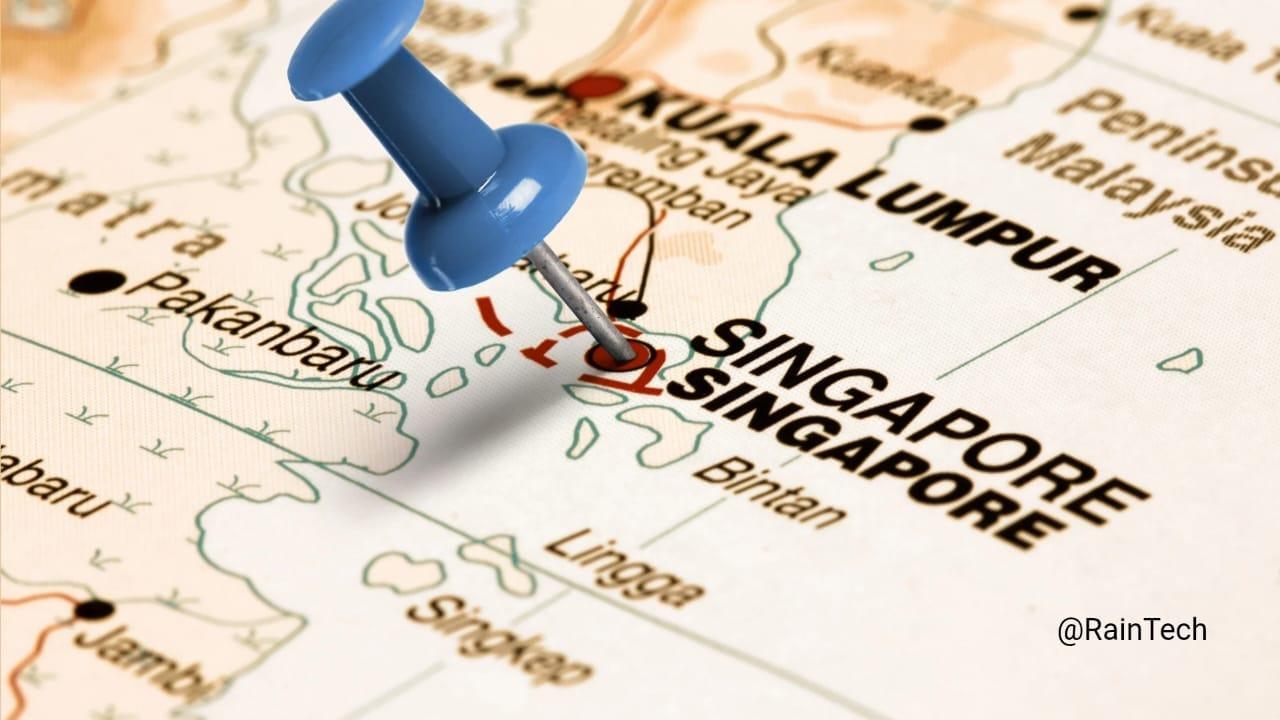
Singapore employers aren't short on candidates — they're short on the right skills, and it's getting harder to close that gap locally. 95% of Singapore employers report ongoing tech hiring challenges in 2026, with data analytics and data science roles the hardest to fill.
Indonesia's tech talent pool, backed by a digital economy approaching $100 billion in 2025, is where a growing number of Singapore companies are turning instead.
If you're leading HR or a tech team in Singapore, the shortage isn't news. What's changed is the shape of it.
It's no longer just "not enough candidates" — General Assembly's State of Tech Talent 2026 report found 95% of Singapore employers still face hiring challenges despite a wider talent pool than before, because the gap has shifted toward applied AI and data skills specifically. 58% of employers named data analytics and data science roles their hardest to fill.
That's the real problem remote regional hiring solves. Not headcount, the specific skills Singapore's own market is struggling to produce fast enough.
Why Singapore Companies Are Looking to Indonesia Specifically
Indonesia isn't a backup option or a lower-cost afterthought. It's Southeast Asia's largest digital economy, with a Gross Merchandise Value approaching $100 billion in 2025 and projected to reach roughly $180 billion by 2030, according to the e-Conomy SEA 2025 report from Google, Temasek, and Bain & Company.
That scale means a tech ecosystem large enough to produce real depth in the exact skills Singapore is short on — not just volume, but developers and data specialists who've built experience inside one of the region's fastest-growing digital markets.
Time zone overlap makes this practical, not just theoretical. Jakarta sits one hour behind Singapore, close enough for real-time collaboration across a full working day — a meaningfully easier setup than hiring across Europe or the US.
Why The Skills Gap is Structural, Not Temporary
It's worth understanding why this isn't a shortage that resolves on its own.
Singapore's overall tech hiring difficulty rate actually eased slightly — from 83% in 2025 to 71% in 2026 — but that improvement came from broader economic cooling, not from more qualified candidates entering the market.
The underlying skills mismatch is still widening: AI-related skills now appear in close to one in five Singapore job postings, up from roughly one in eight a year ago, and across APAC, the ratio of AI talent demand to supply stands at 1:3.6, according to Korn Ferry.
Singapore employers know this. 69% say upskilling existing staff will meaningfully help by 2026, but 58% cite cost as the primary barrier to scaling training fast enough — a higher rate than the US or UK report.
That combination — rising demand, a training pipeline that's too slow and too expensive to close the gap alone — is exactly the condition that makes hiring externally, rather than only upskilling internally, a rational near-term strategy rather than a stopgap.
Indonesia's Tech Talent Depth: Why It Matches What Singapore Needs
This is where Indonesia's scale stops being an abstract statistic and starts being the actual answer.
A $99 billion digital economy doesn't just mean more developers exist. It means the specific roles Singapore is short on (data analytics, data science, applied AI) have had years of real commercial demand to develop against inside Indonesia's own e-commerce, fintech, and digital services sectors, well before a Singapore company ever gets involved.
That matters more than raw headcount. A candidate pool built inside a market with genuine, high-volume production data pipelines produces different (and often stronger) practical experience than a market where these roles exist mostly to serve outsourced projects.
Indonesia's tech talent isn't just numerous — for the specific skills Singapore needs most right now, it's been shaped by a domestic digital economy operating at real scale.
What This Actually Looks Like Operationally
Hiring across the border sounds straightforward until the regulatory side shows up. Contracts, payroll, tax withholding, and mandatory benefits all follow Indonesian law, regardless of where the hiring company is based.
This is where most Singapore companies hit friction — not because Indonesian talent is hard to find, but because employing someone there legally, without a local entity, isn't something a standard Singapore payroll system handles by default.
An Employer of Record removes that step entirely. RainTech's guide to understanding Employer of Record services covers exactly how this works — the EOR becomes the legal employer in Indonesia, while the Singapore-based company manages the actual working relationship day to day.
How Singapore Companies Vet Trust Before Hiring Cross-Border
This is usually the real question underneath every other question a Singapore HR lead or founder asks first, even when it's not phrased directly: how do we know this actually works — the code is secure, the contract holds up, and the person is who they say they are?
Three things tend to come up consistently:
IP and Data Ownership
Any contract with an Indonesian engineer needs to explicitly assign IP created during the engagement to the hiring company, and needs to specify how source code, credentials, and client data are handled and protected throughout the relationship — not left implied. This is standard in a properly structured EOR contract, but worth confirming directly rather than assuming.
Verification Depth, not Just a Resume Review
A candidate passing a take-home coding test isn't the same as a candidate who's been technically screened by someone who can actually evaluate senior-level system design decisions.
"The roles we're placing most with Singapore clients right now aren't generalist developer roles — they're data and applied-AI positions specifically, because that's where the gap actually is," says Veri Ferdiansyah, Co-Founder & CEO of RainTech. "Screening for that means testing real technical depth personally, not just checking a resume for the right buzzwords, and evaluating whether someone can actually communicate and hold ownership async — that's a different skill from being technically strong."
Legal Enforceability
A contract is only as good as whether Indonesian law actually backs it up if something goes wrong. This is precisely the value of hiring through a licensed, entity-owned EOR rather than an informal contractor arrangement — RainTech's guide to EOR versus contractor misclassification covers why this distinction has real legal consequences, not just administrative ones.
Singapore Direct Hire vs. Indonesia via EOR: A Practical Comparison
| Criteria | Hiring Directly in Singapore | Hiring in Indonesia via EOR |
|---|---|---|
| Talent Pool for Data/AI Roles | Constrained — 58% of employers report this as hardest to fill | Deep — shaped by a $99B+ domestic digital economy |
| Time Zone Overlap | Full | Nearly full (Jakarta is 1 hour behind SGT) |
| Legal Setup Required | None (local hire) | None, if hired through a licensed EOR |
| Relative Cost | Baseline | Typically up to 70% lower for comparable roles |
| Hiring Timeline | Constrained by local supply | Faster access to specialist candidates |
Hiring through RainTech typically brings cost savings of up to 70% compared to hiring the same role locally in Singapore or through traditional recruitment channels — a meaningful factor for startups and scale-ups managing runway carefully, though it's worth being clear this isn't about hiring cheaper for the sake of it.
It's about accessing a talent pool deep enough to fill roles Singapore's own market is structurally short on right now. RainTech's breakdown of how remote work drives cost savings and business impact in Indonesia covers this in more detail.
For Singapore companies also weighing other regional markets, RainTech's comparison of Indonesia against Vietnam for 2026 tech hiring is worth reading before committing to one market over another.
FAQs
Why are Singapore companies hiring tech talent in Indonesia specifically, rather than other regional markets?
Primarily scale and skills depth. Indonesia's digital economy is the largest in Southeast Asia, which translates into a deeper pool of specialists in the exact roles Singapore is currently shortest on — data analytics, data science, and applied AI.
Do I need an Indonesian entity to hire there legally?
No. An Employer of Record lets a Singapore-based company legally employ Indonesian talent without setting up a local entity, handling contracts, payroll, and statutory compliance directly.
How do we know the IP and data our Indonesian hire works with is actually protected?
Through a properly structured EOR contract that explicitly assigns IP to the hiring company and specifies data handling obligations. This should be confirmed in writing before signing, not assumed as a default.
How much overlap is there between Singapore and Indonesian working hours?
Jakarta is one hour behind Singapore time, which allows close to a full overlapping working day — closer alignment than hiring across most other outsourcing destinations.
Is this only relevant for large enterprises, or do startups use this too?
Both. Startups typically start with one or two specialist hires to fill an immediate skills gap; larger companies scale through full EOR-managed teams once the model proves out.
Next Step
If your Singapore team is feeling the same skills gap showing up across the industry, take a moment to explore RainTech’s hiring and EOR services to see how seamless remote integration can be.
When you are ready to evaluate candidates, you can also schedule a free 15-minute call with RainTech to talk through what a data or applied-AI hire in Indonesia would actually look like for your team.